Developing and testing approaches to monitor subterranean biodiversity in karst
Biodiversa+ call: ERANET 26/2024, Project number: PN4-P8-235/01.04.2024 Duration: 01/04/2024 – 31/03/2027, Total grant: 871.000 €
Context
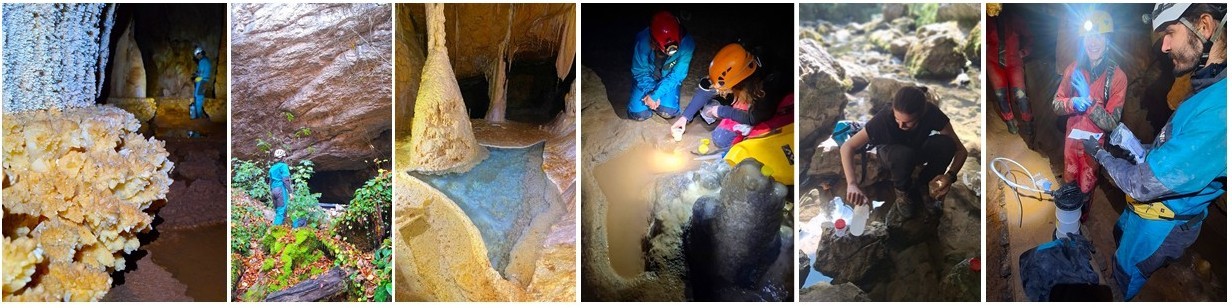
The Sub-BioMon project aims to provide a standardized methods and protocols for monitoring subterranean biodiversity in European karst areas, with a focus on developing and testing novel approaches such is eDNA. The subterranean species of karst regions in Europe represent a unique and indispensable part of European biodiversity. Several specialized species are rare and highly endemic, bound to narrow geographical areas. At the same time, subterranean habitats are among the most challenging for biodiversity monitoring, due to difficult accessibility and the complexity of its exploration, which requires expertise and specialized equipment.
Caves are rare points where humans can enter the subterranean domain and are often considered to be the main habitat for the subterranean species. They are protected as a special habitat type (8310 “Caves not open to the public”) in the EU Habitats Directive, which demands their monitoring at national and international level. However, up to now, there is no standardized sampling method for monitoring subterranean species and habitats.
The Sub-BioMon will reconsider the role of caves as either habitats or simply windows into an extensive subterranean habitat in a fractured rock, consisting of cavities and crevices inaccessible to humans. The project will provide a scientific basis for monitoring, which is relevant to a variety of stakeholders, such as governmental and conservation institutions, management authorities of natural parks and show caves, as well as the general public, all of which will be involved in the project.
Who we are?
We are part of a consortium formed by cave biologists from 6 European countries: Slovenia, Romania, Italy, Hungary, Belgium and Luxemburg.
Sub-BioMon is proposing to test a feasible protocol for monitoring subterranean fauna with focus on crustaceans, spiders, and beetles from selected caves and springs in the six countries. The selection of monitoring sites and microhabitat locations will be based on defining bioregions at different spatial scales, using both large and accessible datasets on selected groups of subterranean species and national databases. The major challenge is to standardize field sampling methods considering the rareness of the subterranean species. Selected target groups will be identified down to the species level and we will employ DNA-based molecular approaches, such is DNA barcoding and environmental DNA (eDNA) for both identification and detection of species including cryptic.

Why it is important?
Subterranean biodiversity especially of cave ecosystems represent a unique and indispensable part of European biodiversity. Subterranean species are strictly adapted to this particular environment (complete darkness, temperature relative constant, scarce food resources), are rare and highly endemic, with narrow distribution at small spatial scale. At the same time subterranean ecosystems and especially caves are challenging for biomonitoring studies due to accessibility and explorations. However, caves are protected as a special habitat type (8310 “Caves not open to the public”) in the EU Habitats Directive, which demands their monitoring at national and international level. Sub-BioMon will provide scientifically supported approaches to assess subterranean biodiversity, directly supporting policy makers and authorities who are in charge to monitor and report on subterranean biodiversity from each country to the international community.
Work packages
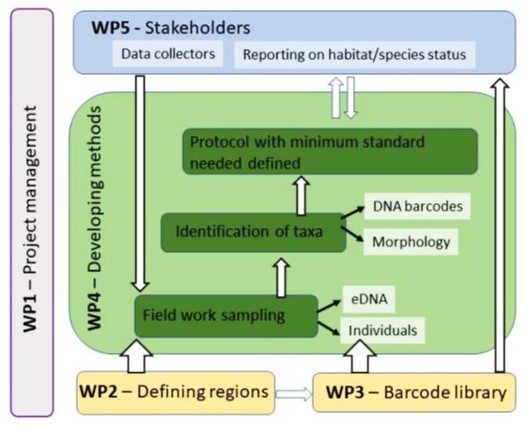
The Sub-BioMon project is organized and described in five interrelated work packages:
WP 1 Project management (Coordinator: Slovenia)
WP 2: Defining subterranean biogeographical regions within karst (Coordinator: Italy)
WP 3: Assessing the readiness of DNA information for routine species identification and implementation in (e)DNA-based assessments of subterranean communities (Coordinator: Luxemburg)
WP 4: Developing and testing the methodology for minimal standards of field work sampling (Coordinator: Romania)
WP 5 From science to practice: involving different stakeholders (Coordinator: Hungary)
Partners of the project
Biotechnical Faculty, Department of Biology, SubBioLab, University of Ljubljana, Ljubljana, Slovenia (Principal Coordinator)
Emil Racovita Institute of Speleology, Cluj Napoca, Romania
Faculty of Sciences, Department for Biology of Organisms, Free University of Brussels (ULB), Brussels, Belgium
Department of Life, Health and Environmental Sciences (MESVA), University of L’Aquila, L’Aquila, Italy
Department of Systematic Zoology and Ecology, Eötvös Loránd University, Budapest, Hungary
National Museum of Natural History Luxembourg, Zoology Department; Luxembourg
Coordinator Romania:
Dr. Sanda IEPURE
Funding agencies:
SubBioMon is co-funded by the European Commission (GA № 101052342) and the following funding organizations:
Ministry of Higher Education, Science and Innovation (Slovenia)
The Belgian Science Policy (Belgium)
Ministry of Universities and Research (Italy)
National Research, Development and Innovation Office (Hungary)
Executive Agency for Higher Education, Research, Development and Innovation Funding (Romania)
Self-financing partner:
National Museum of Natural History Luxembourg (Luxembourg)
Romanian Collaborators